Time and temperature are just as critical to professional baking as flour and water. The true soul of artisan bread lies in its fermentation. Mastering this biological process is entirely achievable in small hand-crafted batches. However, scaling operations presents a severe engineering hurdle. Growing bakeries constantly struggle to meet commercial demand. The challenge is increasing output without losing that signature open crumb, micro-blistered crust, and complex flavor profile.
Maintaining precise fermentation windows at a commercial scale requires bridging traditional baking science with modern industrial technology. This transition is where investing in specialized equipment becomes the defining factor. It separates standard grocery aisle bread from premium artisan loaves. We will break down the specific fermentation windows that dictate bread specifications. Furthermore, we will explore how modern automated systems solve these delicate biological challenges to ensure empirical consistency.
Key Takeaways
Flavor and Texture are Time-Dependent: Bulk fermentation and cold retardation are the two most critical processing windows. They directly dictate crumb openness, crust blistering, and the delicate balance of lactic versus acetic acid flavors.
Consistency Requires Strict Control: Environmental variables like ambient temperature, humidity, and processing time must be rigidly managed. Manual handling at high volumes frequently leads to inconsistent product specifications and expensive waste.
Technology Bridges the Quality Gap: Advanced industrial equipment utilizes climate-controlled proofing environments and gentle dough handling mechanisms. This accurately replicates hand-crafted fermentation results at high production volumes.
Versatility is Essential: Modern automated systems allow bakery operators to customize intermediate resting and final proofing times. This ensures high throughput without sacrificing the structural integrity of artisan dough.
The Biological Mechanics of Fermentation Windows
To understand how to scale artisan bread, you must first define a fermentation window. In commercial baking, this window is the specific timeframe and temperature range where yeast, specifically Saccharomyces cerevisiae, and lactic acid bacteria metabolize complex starches. This biological process produces carbon dioxide gas to leaven the bread. It also generates organic acids and ethanol that develop the complex flavor profile characteristic of premium baked goods.
Recent market analysis reveals a massive consumer shift toward clean-label and long-fermented goods. Modern consumers actively seek out breads with authentic sourdough profiles rather than rapid-rise commercial alternatives. This industry trend places immense pressure on wholesale producers. The current market focus is entirely on replicating traditional 24-to-48-hour fermentation cycles within a highly efficient manufacturing environment. The challenge is no longer just making bread faster. It is about scaling time-honored biological processes without compromising dough integrity. Implementing a highly calibrated Bakery Production Line is now a baseline requirement for competing in this premium space.
Successful management of these variables forms the foundation of the sourdough framework. This framework relies heavily on the precise interplay of hydration levels, ambient facility temperature, and starter culture inoculation rates. Missing a designated fermentation window by even thirty minutes drastically alters the final bread specifications. Extending the window too far leads to over-proofing. The gluten network degrades from excessive acidity, resulting in a collapsed physical structure and a dense crumb.
A critical component of this science is balancing lactic and acetic acid. Warmer and shorter fermentation windows favor lactic acid production. This imparts a creamy, mild flavor to the crumb. In contrast, cooler and extended fermentation windows favor acetic acid development. This extended timeline produces the sharp sour tang that consumers associate with traditional rustic sourdough.
How Bulk Fermentation Dictates Crumb Rheology
Bulk fermentation is the foundational window for building dough strength. It establishes the initial gas entrapment network. During this phase, the entire batch of dough ferments as a single cohesive mass. The primary objective is not merely volume expansion. It is the biochemical development of the gluten matrix. This window is structurally critical because it determines the rheological properties of the dough—specifically its elasticity and extensibility—before dividing.
The impact of bulk fermentation on final specifications cannot be overstated. As yeast produces carbon dioxide, the gas becomes trapped within the developing gluten web. Proper folding techniques applied during this window align the gluten strands and equalize the temperature throughout the mass. This mechanical strengthening allows the dough to hold large pockets of gas. Ultimately, this leads to the highly desired open crumb characterized by irregular translucent holes.
Identifying the optimal end-point requires strict observation of physical cues. Professional bakers look for specific signs rather than relying entirely on a clock. The dough should exhibit domed edges where it meets the container walls. Visible fermentation bubbles should rest just beneath a smooth surface. The mass should display a distinct kinetic jiggle when moved. These indicators confirm the gluten network is sufficiently developed and ready for the mechanical stress of dividing.
Cold Retardation and Crust Development
Following shaping, the secondary critical phase is cold retardation. This window involves moving the shaped dough into a refrigerated environment, typically maintained between 3°C and 5°C. The resting period ranges from 12 to 72 hours. Cold retardation is a standard protocol designed to manipulate enzymatic activity and bacterial fermentation rates.
The impact of this cold window manifests primarily in crust characteristics and flavor complexity. At these low temperatures, yeast activity slows down significantly. This halts rapid gas production and prevents over-proofing. However, enzymes such as amylase and protease continue to function alongside lactic acid bacteria. Amylase breaks down complex starches into simple sugars. These residual sugars are crucial for the Maillard reaction during baking, resulting in a deeply caramelized exterior crust.
Furthermore, cold retardation is directly responsible for micro-blister formation. As the chilled dough enters a high-heat oven, surface moisture rapidly turns to steam. This rapid expansion creates small brittle blisters just below the skin. These blisters provide a delicate crunch and a visually appealing rustic texture that warm-temperature proofing simply cannot replicate.
The Production Bottleneck in High-Volume Scaling
Managing precise fermentation windows is highly achievable in small batches. However, it presents a severe logistical bottleneck for growing commercial facilities. When output requirements scale to thousands of loaves per shift, manual handling becomes operationally unsustainable. The sheer volume of the dough mass generates internal heat, which accelerates fermentation unpredictably.
Manual scaling introduces a fatal flaw. Intra-batch inconsistency destroys product uniformity. The time required to manually divide a massive batch creates a significant time delta. The first loaf shaped from the mixing bowl experiences a vastly different ambient fermentation window compared to the final loaf processed an hour later. Consequently, the last dough pieces are often over-fermented before they even reach the retarder. The result is inconsistent crumb structures and non-uniform flavor profiles.
Eliminating these human-induced variables requires a transition to automation. Implementing an Automated bread production line mathematically standardizes processing times. It ensures the duration between bulk fermentation and cold retardation is identical for every single dough piece. This effectively removes the time delays inherent in manual labor.
Engineering Solutions for Fermentation Variables
Maintaining artisan specifications at an industrial scale requires machinery engineered to respect dough biology. Conventional high-speed bread lines rely on aggressive extrusion. In contrast, specialized equipment integrates gentle dough handling technology with precise environmental controls. The objective is processing highly hydrated, fully fermented dough without destroying the delicate gas pockets.
The core of this advanced technology is stress-free dough sheeting. Instead of forcing dough into volumetric pistons, a stress-free line uses gravity. It employs a series of calibrated non-stick reduction rollers to sheet the dough into a continuous band. This method preserves the established gluten matrix. The dough is then weighed and cut with precision guillotines. This ensures accurate portioning without subjecting the fermented mass to harsh mechanical degassing.
Processing Metric
Traditional Volumetric Lines
Advanced Artisan Automated Lines
Dough Stress
High mechanical shear and extrusion
Gravity-fed stress-free sheeting
Hydration Limits
Max 60% to 65% water content
Handles up to 80% high-hydration doughs
Crumb Structure
Tight, uniform, closed cell
Open, irregular, artisan specifications
Fermentation Control
Prone to degassing over-fermented dough
Preserves gas pockets via precision cutting
Beyond mechanical handling, these automated systems integrate seamlessly with advanced climate control. Automated intermediate proofers enclose the dough in precisely monitored microclimates. By locking in specific temperature and humidity setpoints, the equipment guarantees identical environmental conditions. Automated conveyors facilitate seamless transitions, optimizing the sourdough framework across high-volume operations.
Modular Control for Multi-Product Lines
Different bread categories require vastly different fermentation and resting windows. A rustic high-hydration baguette relies on minimal degassing and long resting periods. This develops its signature irregular crumb and crisp crust. Conversely, standard sandwich toast requires a tighter crumb structure to support slicing. This necessitates intensive mixing and a tightly controlled proofing window.
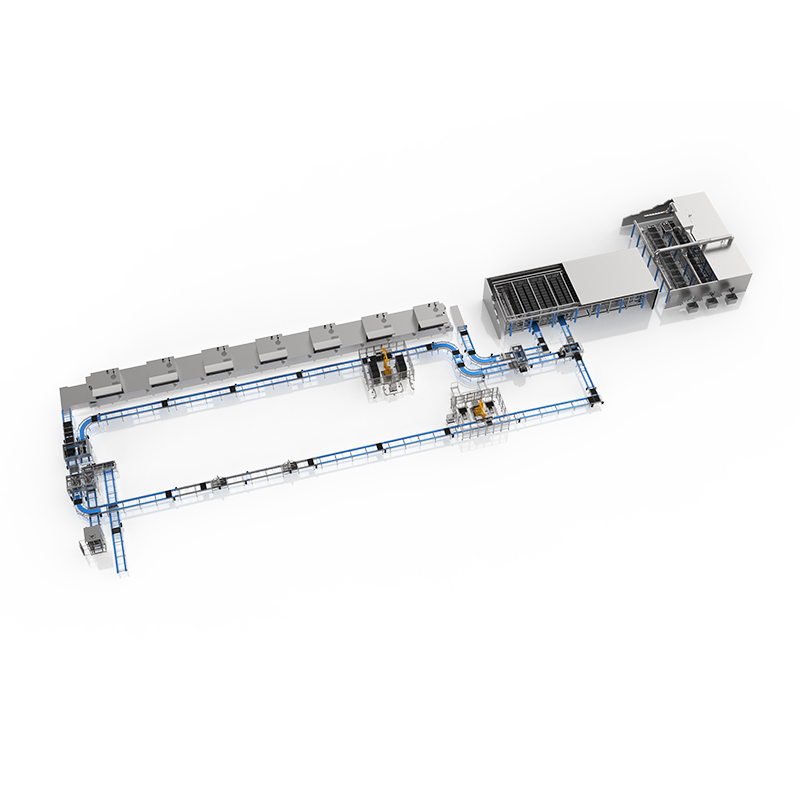
To accommodate varying specifications, modern equipment must offer high flexibility. An advanced Baguette Toast Production Line features modular resting stations and highly adjustable speed controls. Production managers can alter the physical path the dough takes through the machinery. By utilizing bypass conveyors or engaging specific proofing cabinets, bakeries dictate exactly how long the dough rests after dividing. This relaxes the gluten network just enough to prevent tearing during final shaping.
This flexibility translates directly into robust multi-product capabilities. Bakeries can switch from running a long-fermented rustic baguette shift to a tightly-crumbed toast bread shift on the exact same system. Operators adjust programmed resting windows and engage different shaping modules to diversify SKU offerings while maintaining strict biological parameters.
Equipment Selection Criteria for Bakery Engineers
Upgrading a facility to automate artisan processes requires an objective evaluation of machinery. Purchasing decisions must be driven by the equipment's ability to protect biological integrity while delivering consistent throughput. Here are the core engineering standards to look for.
Stress-Free Dividers: Traditional volumetric dividers use vacuum suction and heavy pistons. This mechanical force completely destroys the open cell structure created during artisan bulk fermentation. Stress-free dividing technology utilizing gentle sheeting is absolutely non-negotiable for maintaining artisan crumb specifications.
Programmable Logic Controllers: Consistency requires repeatable data. Advanced lines utilize digital touchscreens that allow operators to save recipe profiles. These systems automatically adjust belt speeds, roller gaps, and intermediate resting times based on the specific dough. Digital management ensures mechanical processing aligns perfectly with the biological window.
Scalability and Footprint: Facility space is a premium metric. Evaluating a Bread Production Line for Bakeries involves analyzing its modularity. The ideal system fits within the current footprint but features a modular architecture. This allows for future add-ons like automatic scoring units or seeding stations as production demands increase.
Vendor Reliability and Expertise: The transition to automated artisan baking is highly technical. It is crucial to partner with established manufacturers who possess deep mechanical engineering expertise and a thorough comprehension of dough rheology. Reliable vendors provide equipment that adapts to the dough rather than forcing the dough to adapt to the machine.
FAQ
How does an automated bread production line handle high-hydration doughs?
High-quality artisan lines use stress-free sheeting technology, automated flour dusters, and specialized non-stick reduction rollers. This sophisticated engineering allows the machinery to smoothly process wet and sticky doughs with 75% to 80% hydration. It achieves this without adhering to the belts or degassing the carefully fermented structure.
Can I achieve a sour flavor profile using a commercial bakery production line?
Yes. The sour flavor profile is dictated by the fermentation window prior to and during mechanical processing. By utilizing cold retardation and automated climate-controlled proofers integrated directly into the line, bakers perfectly control the environment. This encourages acetic acid development, resulting in a distinct sour tang.
What is the difference between a standard bread line and an artisan bread production line?
Standard lines typically employ harsh volumetric dividers and tight moulders that aggressively degas the dough. This results in a tight and uniform crumb ideal for sandwich bread. Artisan lines utilize gentle stress-free handling to preserve the open cell structure and delicate gas pockets created during the bulk fermentation phase.
How long should the resting window be on a baguette or toast production line?
Resting times vary strictly by recipe and dough strength. However, automated lines typically feature intermediate proofers that allow dough pieces to rest for 10 to 30 minutes immediately after dividing. This crucial window relaxes the gluten network before final shaping, preventing tearing and ensuring proper oven spring.
How does ambient facility temperature affect the fermentation window?
Ambient temperature directly dictates the speed of yeast and bacterial metabolism. A facility that fluctuates in temperature will cause inconsistent proofing times. Automated lines solve this by utilizing enclosed, climate-controlled proofing cabinets that isolate the dough from ambient factory conditions, ensuring absolute consistency.
What is the ideal humidity for intermediate proofing?
Intermediate proofing typically requires a relative humidity between 70% and 80%. If the humidity is too low, the dough surface dries out and forms a skin, which causes tearing during final shaping. Advanced automated lines use ultrasonic humidifiers within the resting cabinets to maintain this precise moisture balance.
The specifications of true artisan bread—its complex flavor, airy crumb, and blistered crust—are entirely shaped by precise bulk fermentation and cold retardation windows. Scaling your bakery production does not require compromising on these artisan qualities. It simply means upgrading to the right industrial tools. Ready to scale your operations with empirical consistency? Explore the high-performance automated solutions at Kenxin Tech to find the exact machinery that protects your dough's integrity while maximizing throughput.