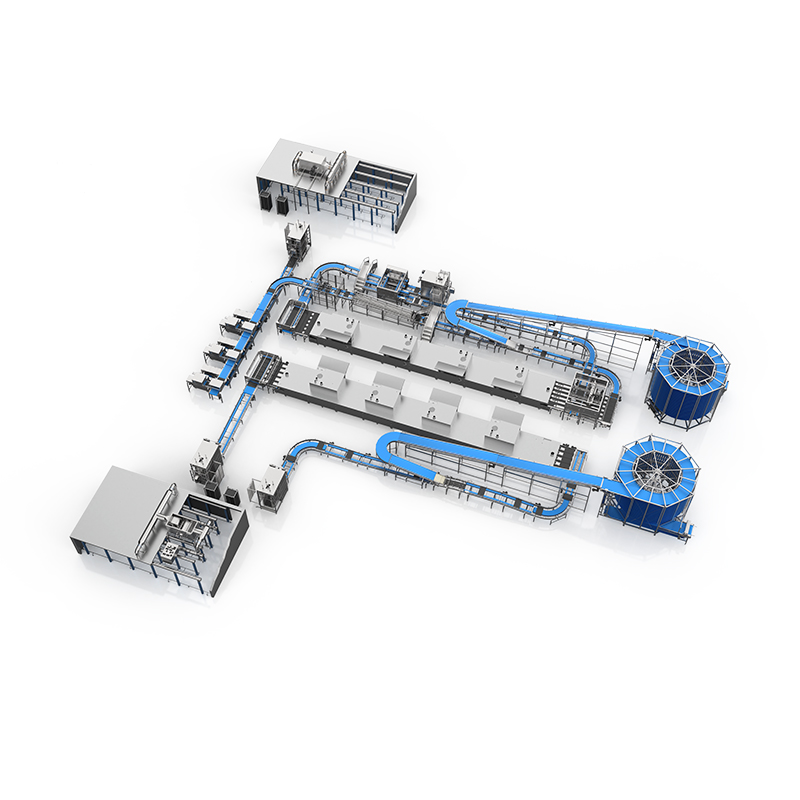
Scaling croissant production poses a unique engineering challenge for modern bakeries. You must constantly balance mechanical shear, thermal regulation, and gluten relaxation across delicate laminated dough layers. When you scale from benchtop baking to commercial volume, mismatched machinery frequently leads to product failure. Poor roller tolerances cause sudden butter rupture. Incorrect proofing environments create dry dough skinning. Weak steam systems result in inadequate oven spring.
We designed this guide as an objective evaluation framework. It exists to help bakery operators, wholesale commissaries, and plant managers navigate complex machinery investments. By understanding the core physics behind lamination and baking, you can select, size, and integrate the right machinery confidently. You will learn how to build a reliable, synchronized production line without sacrificing the artisanal quality of your pastries.
Key Takeaways
The Core Equipment Baseline: Commercial production requires five synchronized machinery groups: low-friction spiral mixers, precision dough sheeters, blast chillers, retarder proofers, and steam-injected convection/rotary rack ovens.
Thermal Preservation Dictates Quality: Equipment selection must prioritize dough temperature control (<19°C / 66°F during lamination); standard walk-ins cannot substitute for rapid blast chilling.
Capacity Dictates Form Factor: Operations under 500 units/day achieve highest ROI with floor-model reversible sheeters, whereas wholesale production (>2,500 units/day) demands semi-automated or continuous industrial laminating lines.
Hidden Utility Demands: Infrastructure bottlenecks—specifically 3-phase electrical loads, dedicated reverse osmosis water lines for steam systems, and ambient HVAC capacity—frequently delay deployment if not audited early.
1. The Croissant Manufacturing Workflow: Core Machinery by Stage
Phase 1: Dough Preparation & Mixing
Spiral mixers utilize a two-speed drive mechanism. We consider this feature non-negotiable over standard planetary mixers. Spiral action prevents premature dough warming and stops excessive gluten development. When handling laminated dough, maintaining a cool matrix is vital. Modern operators look for integrated infrared or core bowl sensors. These sensors monitor the final dough temperature actively. You want to hit a strict target between 18°C and 20°C (64°F–68°F). We also recommend removable bowl configurations for mid-to-large setups. They justify their footprint by enabling continuous batch feeding without stalling the entire line.
Phase 2: Lamination & Sheeting
Reversible dough sheeters form the beating heart of your operation. When evaluating Croissant Production Equipment, you must scrutinize roller gap precision. Precise cylinder calibration avoids tearing the dough and prevents operators from crushing the delicate butter sheet, known as the beurrage. Next, review the conveyor belt materials. Synthetic anti-microbial belts offer superior dough release. They maintain higher hygiene standards than traditional cotton belts. Finally, consider automatic flour dusters and reeling devices. They reduce manual labor significantly. However, you must weigh this benefit against potential dough contamination risks from excess flour build-up.
Phase 3: Blast Chilling & Intermediate Rest
Do not rely on standard commercial freezers. They fail disastrously during intermediate resting stages. Slow heat extraction creates large ice crystals. This slow process allows the butter to soften, causing structural layer collapse. Instead, you need dedicated blast freezers or shock chillers. Demand rapid core pull-down specifications from your manufacturer. The unit must drop laminated dough blocks to 2°C–4°C within 20 to 30 minutes to lock the fat layers in place.
Phase 4: Make-Up, Cutting, and Shaping
Croissant cutters and guillotines handle the final shaping logic. Benchtop rotary cutters suit small cafes well. Automated longitudinal and transverse cutting tables fit larger volumes better. Prioritize machines featuring calibrated dough thickness detectors. They maintain uniform piece weights right before the curling stage. For the curling machines, weigh your operational trade-offs carefully. Manual rolling offers high artisanal appeal but introduces high labor variance. Mechanical rolling units deliver strict uniformity. They create tight seam seals and boost overall output speed dramatically.
Phase 5: Controlled Fermentation & Proofing
Retarder proofers utilize multi-stage programmable controllers. They combine cold holding (-2°C to 4°C) with slow, controlled thawing. They finish with final proofing at 26°C to 27°C and 75–80% relative humidity. Ensure your proofer includes rigorous upper temperature limit protection. The internal heat must never breach the butter melting point, usually around 32°C (90°F). Pay close attention to air circulation dynamics. Gentle laminar airflow systems prevent dough skinning. They keep outer layers supple without drying them out prematurely.
Phase 6: Thermal Processing (Baking)
Baking dictates your final crust quality and structural integrity. Rotary rack ovens provide high-volume consistency. They offer rapid load and unload turnaround times. Their convective heat distribution bakes every tray evenly. Alternatively, deck ovens with stone hearths appeal to artisanal bakeries. Use them if you target heavy bottom crust caramelization and a rustic aesthetic. Regardless of your oven type, high-volume steam injection systems remain critical. They generate rapid moisture saturation during the first 60 to 90 seconds. This moisture keeps the dough flexible and maximizes oven spring for perfectly blistered lamination.
2. Equipment Sizing Models: Matching Setup to Daily Output
Tier 1: Small Artisan Bakery & Cafe (200 – 600 Units / Day)
Small artisanal operations require an equipment footprint under 800 square feet. This tight layout demands maximum efficiency from every machine. The core lineup starts with a 30 to 50 kg fixed-bowl spiral mixer. You pair this with a floor-standing manual reversible sheeter featuring a belt width between 500 and 650 mm. A reach-in two-door blast chiller handles the cooling phases. A single-rack retarder proofer cabinet manages fermentation. Finally, baking relies on a 10-pan or 16-pan convection oven, or a single rotary rack oven. The labor profile relies on two to three skilled lamination bakers. They handle high manual touchpoints during cutting and curling.
Mid-sized commissaries scale their footprint up to 1,500 – 3,500 square feet. You need an 80 to 120 kg removable-bowl spiral mixer paired with a bowl lifter. Lamination shifts to a programmable automated reversible sheeter with synchronized reeling. Cooling requires a roll-in blast chiller capable of holding one or two full racks. You will also need a multi-rack roll-in retarder proofer chamber. Make-up relies on an automated cutting and winding table. Baking scales up to single or double rotary rack ovens featuring rapid temperature recovery. The labor profile shifts to an operator-monitored line. Staff focuses heavily on producing frozen unbaked (FUB) or par-baked inventory for shift efficiency.
Tier 3: Industrial Continuous Production (>5,000 Units / Day)
Industrial plants demand footprints exceeding 5,000 square feet. They operate continuous industrial laminating lines equipped with multiple multi-roller reduction stations, often called satellite heads. The process flows through in-line cooling tunnels and continuous resting belts. Shaping happens via automated longitudinal guillotine cutting, turning, and multi-lane curling systems. Fermentation runs through a continuous spiral proofer. Baking utilizes massive tunnel ovens or multi-double-rack oven batteries. The labor profile moves entirely away from bakers to line technicians, maintenance engineers, and QA personnel.
Production Setup Sizing and Capacity Breakdown
Production Tier
Daily Volume
Estimated Footprint
Labor Profile
Key Sheeting Equipment
Tier 1: Artisan & Cafe
200 – 600 Units
Under 800 sq ft
2–3 Skilled Bakers
Manual floor-standing reversible sheeter
Tier 2: Commissary
1,000 – 4,000 Units
1,500 – 3,500 sq ft
Operator-Monitored
Programmable automated sheeter
Tier 3: Industrial
>5,000 Units
Over 5,000 sq ft
Technicians & QA
Continuous multi-roller lamination line
3. Engineering & Operational Criteria for Equipment Selection
Dimensional Accuracy & Mechanical Tolerances
Measure roller rigidity under load stringently. When dough pushes back, weak rollers deflect in the center. This mechanical failure creates thicker edges and thin centers on your dough sheets, ruining uniformity. The tension adjustment mechanisms on conveyor belts demand equal scrutiny. They prevent the dough from stretching during transit. Stretched dough shrinks violently during baking and distorts your final product shape.
Thermal Control & Ambient Management
Heat dissipation from mixer motors poses a hidden risk to your dough matrix. Select equipment featuring isolated gearboxes. They prevent direct heat transfer into your mixing bowl. For chilling cycles, study the blast chiller curves meticulously. Ensure the chamber maintains uniform air distribution across all levels. Top and bottom trays must freeze at identical rates to guarantee uniform lot quality upon baking.
Steam Generation & Baking Physics
Analyze steam boiler recovery times before purchasing an oven. Calculate the exact cycle time you need between bake loads. Slow recovery drops chamber temperatures abruptly. This creates a dry environment during initial baking stages and limits pastry expansion. Pair robust boilers with programmable exhaust and damper controls. You want the ability to evacuate moisture aggressively during the final 20% of the baking cycle. This specific action sets the crisp, flaky crust laminations permanently.
Sanitation, Washdown, and Compliance
Sanitation impacts daily labor directly. Demand food-grade AISI 304 stainless steel construction across your line. Specify IP65 washdown-rated electrical enclosures to ensure safe, rigorous cleaning. Inspect the scraper blade design on your sheeters carefully. You want quick-release, tool-free scrapers. They allow fast daily sanitation without scratching or damaging delicate roller surfaces. Finally, verify all regulatory certifications. NSF, CE, and UL standards confirm commercial electrical safety, sanitation compliance, and essential interlock security.
4. Facility Integration Risks
Facility Infrastructure and Utility Prerequisites
Infrastructure limits scale faster than any other factor. Begin by sizing your 3-phase (208V/480V) electrical services properly. You must address the massive concurrent draw of ovens, blast chillers, and retarders running simultaneously. Next, upgrade your water treatment infrastructure. Installing reverse osmosis (RO) or robust water softening systems is mandatory. Hard water causes rapid calcium scaling in proofer tanks and oven steam generators, leading to expensive downtime. Finally, engineer your ambient HVAC and room insulation carefully. Design a temperature-controlled sheeting room targeting 16°C to 18°C (60°F–64°F). This prevents mid-lamination butter melting during peak summer production months.
Supply Chain and Maintenance Dependencies
Equipment downtime ruins production schedules instantly. Secure reliable access to mission-critical spare parts before finalizing a purchase. Identify suppliers who stock replacement belts, optical sensors, heating elements, and sheeter scrapers domestically. Additionally, confirm the availability of local, certified technicians. Specialized dual-stage refrigeration compressors in blast chillers require expert handling. If your local bakery technicians cannot service complex PLC controllers or cryogenic systems, you face severe operational risks.
5. Croissant Production Equipment Shortlisting & Procurement Framework
Step 1: Volume & Expansion Modeling
First, calculate your 12-to-24-month peak daily croissant demand accurately. Always factor in seasonal surges and holiday rushes. You must also determine your primary SKU format. Will your production focus on fresh-daily baking, unproofed frozen blocks, or par-baked inventory? When investing in Croissant Production Equipment, this specific decision dictates your path. It tells you whether to prioritize massive blast freezer capacity or extra rotary oven racks.
Step 2: Line Capacity Balancing (Identifying the Bottleneck)
Identify the operational bottleneck early to protect your workflow. You must balance cycle times carefully across every stage. Map out your mixer batch volume against sheeting speed, blast chiller pan capacity, proofer dwell time, and oven rack throughput. Avoid the dreaded "oven trap." Many bakeries install a massive double-rack oven that sits idle half the day. They suffer this inefficiency because they lack the sheeting speed or blast chilling capacity to keep the oven fully fed.
Never purchase major equipment without strict validation protocols. Conduct physical dough trials at manufacturer demo centers. Use your exact operator flour, butter ratios, and target hydration levels to simulate real conditions. Measure the roller gap accuracy using physical gauge blocks under full dough resistance. Finally, verify the blast chiller temperature logging data. Ensure the pull-down curves hold true under full-pan loads, rather than just empty test chambers.
Conclusion
Control temperatures early: Consistent pastry quality relies entirely on temperature management and lamination precision long before the dough ever touches an oven rack.
Prioritize structural equipment: Invest heavily in a rigid, programmable sheeter and adequate blast freezing infrastructure before you scale up your baking capacity.
Audit infrastructure immediately: Conduct a comprehensive electrical and facility footprint audit to ensure your utilities support peak 3-phase machinery loads.
Demand physical validation: Establish your daily SKU volume targets and enforce supplier demo trials using your own production-grade dough formulas before finalizing any purchase.
FAQ
Q: Can a commercial bakery use a standard walk-in freezer instead of a blast chiller for croissant dough?
A: No. Standard walk-in freezers lack the air velocity required to rapidly freeze laminated fat layers. Slow freezing causes the butter to melt into the dough matrix. It also forms large ice crystals that puncture the gluten network. This destroys the lamination structure, resulting in flat, dense pastries rather than flaky croissants.
Q: What is the primary difference between a manual reversible sheeter and a programmable automated sheeter?
A: A manual sheeter relies entirely on operator skill to adjust roller gaps and catch the dough. An automated sheeter stores precise reduction curves in its memory. It ensures perfect consistency across different shifts. It often integrates automatic flour dusting and reeling, which drastically lowers labor dependence at higher volumes.
Q: Why do croissant ovens require specialized high-capacity steam systems?
A: Steam plays a critical role during the first minute of baking. It keeps the exterior dough skin flexible and moist. This flexibility allows the moisture in the butter to vaporize and expand fully into large pockets. Without immediate steam, the crust sets prematurely, severely limiting oven spring and flake separation.
Q: How much floor space is required to set up a semi-commercial croissant production line?
A: A semi-commercial setup typically requires 1,500 to 3,500 square feet. You must account for a linear or L-shaped equipment layout. This footprint provides necessary clearance for rolling racks, safe sanitation access, and a dedicated, climate-controlled sheeting room to prevent bottlenecks between chilling and make-up phases.