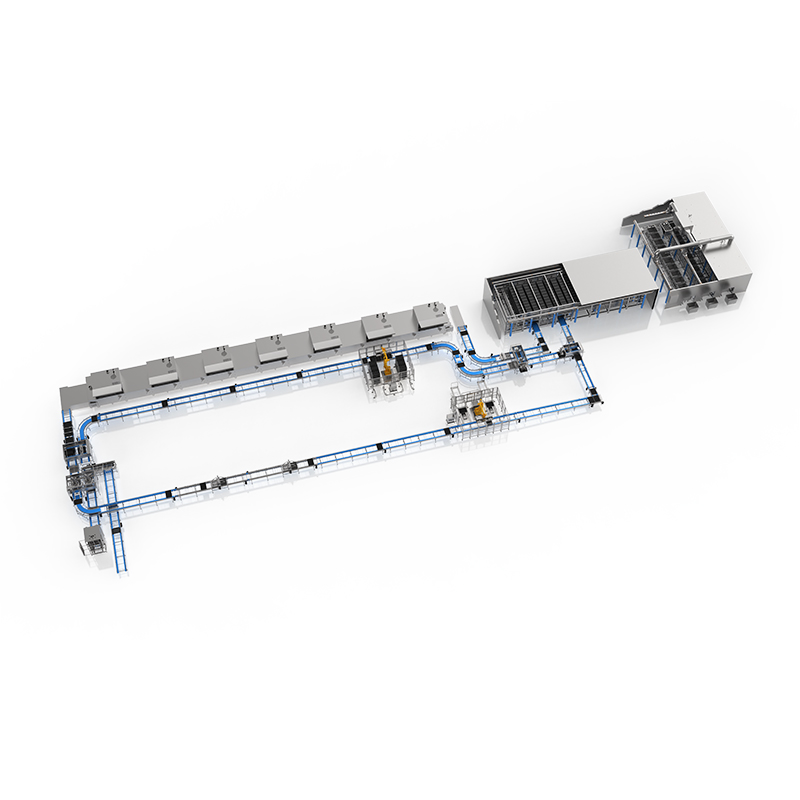
Are messy conveyor belts ruining your product quality? Uneven sauce distribution wastes valuable ingredients daily. In high-volume food manufacturing, applying liquids with exact precision is just as crucial as the recipe itself. The wrong nozzle choice inevitably causes costly daily delays, sanitation headaches, and rejected batches. Process engineers and bakery owners must learn exactly how to match the right fluid dynamics to their specific equipment. Doing so transforms a messy operation into a highly profitable, streamlined system.
Key Takeaways
Viscosity Dictates the Pattern: The thickness of your liquid and the presence of solid particulates are the primary factors when deciding between flat fan, full cone, or solid stream setups.
Precision Saves Capital: Implementing the correct nozzle architecture drastically reduces ingredient waste, minimizes overspray, and lowers manual sanitation costs.
Application-Specific Needs: Different baked goods require entirely distinct setups. A loaf needs fine mist glazes, whereas pizza or pastry lines require heavy, targeted sauce deposits.
Equipment Integration: Upgrading to modern nozzle technology ensures seamless integration with commercial production speeds and Clean-in-Place systems.
The Shift Toward Clean-Label Fluid Dynamics
The food processing sector is currently experiencing a massive shift toward clean-label products featuring real, chunky ingredients. Modern consumers demand visible oregano leaves, minced garlic, and fruit seeds in their food. This industry-wide trend has rendered legacy liquid application systems completely obsolete. Standard nozzles pose a severe clogging risk when handling these particulate-rich fluids. Consequently, modern facilities are forced to rethink their engineering approach, upgrading to specialized wide-passage systems to maintain relentless continuous production without sacrificing ingredient integrity.
Why the Right Spray Pattern Matters in a Sauce Spreading Line
In industrial food processing, applying liquids is a highly engineered process. Whether you are dispensing dense tomato paste, edible pan release oils, sugar glazes, or egg washes, the exactness of your liquid deposition directly impacts your operational profitability. Selecting the correct spray pattern is not merely a mechanical detail. It is a fundamental business decision that affects both the top and bottom lines of a manufacturing facility.
Ensuring Product Consistency and Quality Control
Modern consumers expect absolute uniformity. When a customer purchases a packaged pastry or a frozen pizza, they anticipate identical taste, texture, and appearance in every single unit. An incorrect spray pattern completely disrupts this consistency. If a sauce applicator delivers an uneven coat, the result is a compromised product featuring soggy centers and dry, burnt edges.
Specifically, in automated environments, standard deviation in product weight must be kept to an absolute minimum. Large, heavy droplets caused by poor atomization lead to localized pooling. This pooling alters the thermodynamic baking dynamics in the commercial oven, leading to color variations and structural weaknesses in the dough. By matching the spray pattern to the specific dimensions of the food product, production managers guarantee a uniform coating that meets strict quality control parameters. This precision plummets batch rejection rates.
Minimizing Ingredient Waste and Maximizing Return on Investment
Ingredient costs represent a massive portion of operating expenses in food manufacturing. Overspray occurs when a poorly configured spray pattern extends beyond the edges of the target product, coating the conveyor belt instead. Imagine a high-speed bakery floor where a few grams of wasted oil or glaze per product may seem negligible at first glance. However, in a facility processing tens of thousands of units per hour, this waste compounds rapidly. It bleeds thousands of dollars from the annual budget.
Furthermore, overspray leads to severe secondary costs. The conveyor belt requires much more frequent cleaning. Machinery experiences higher wear and tear due to sticky residue buildup, and production must be halted for manual sanitation. By investing in precise application technology, facilities direct exactly one hundred percent of the liquid onto the product, maximizing Return on Investment and minimizing environmental impact.
The 4 Core Spray Patterns for Automated Sauce Application
Understanding the fluid dynamics of different spray patterns is essential for process engineers. Buyers must objectively evaluate their specific application requirements against the mechanical capabilities of available nozzle types to avoid costly retrofits later.
Spray Pattern
Best Application
Viscosity Range
Key Engineering Benefit
Flat Fan
Pan release oils, light glazes, water scoring
Low
Provides uniform linear coverage across wide conveyor belts.
Full Cone
Pizza sauce, heavy pastry coatings
Medium to High
Delivers dense, penetrating application in a perfectly circular footprint.
Hollow Cone
Delicate egg washes, volatile flavorings
Low
Produces a very fine mist that prevents degassing of fragile dough.
Solid Stream
Internal dough injections, decorative icing
Very High
Offers exact volumetric control for thick fluids that resist atomization.
Flat Fan Spray
The flat fan spray pattern produces a linear, sheet-like spray. As the liquid exits the nozzle under pressure, it forms a wide, sweeping area. This pattern is absolutely ideal for applying thin layers of pan release oil or light sugar glazes across a continuously moving belt of products. Overlapping multiple flat fan nozzles on a customized header allows engineers to achieve perfectly uniform coverage across a conveyor belt of any width.
Full Cone Spray
In contrast, a full cone spray pattern distributes liquid uniformly over a dense, circular area. The interior of the spray cone is completely filled with droplets, ensuring a heavy, penetrating application. When processing pizzas or round cakes, a full cone nozzle is the optimal choice. In high-speed operations, these specific nozzles are frequently paired with optical sensors to pulse on and off rapidly. They deposit a perfect circle of heavy sauce precisely as the product passes underneath.
Hollow Cone Spray
The hollow cone pattern creates a circular ring of liquid, intentionally leaving no droplets in the center of the spray area. This unique design naturally produces significantly smaller droplet sizes compared to full cone alternatives. Because it creates a very fine, suspended mist, the hollow cone is excellent for applying delicate egg washes on a raw dough line. The soft nature of the atomized mist ensures that fragile, proofed dough structures are not collapsed by the physical kinetic impact of the spray.
Solid Stream
A solid stream nozzle does not atomize the liquid at all. Instead, it delivers a continuous, unbroken column of high-velocity fluid directly to a precise location. This pattern is deployed when a liquid needs to be applied in a highly specific strip, or when injecting a thick filling directly into a dough pocket. It provides exact volumetric control and is highly effective for heavy, viscous substances.
Matching Sauce Viscosity and Particulates to Your Nozzle
The physical properties of your liquid dictate which spray pattern and nozzle technology will actually function on the floor. A setup perfectly calibrated for water will fail catastrophically within seconds if tasked with pumping heavy caramel.
Handling Thin versus Thick Viscosities
Viscosity, typically measured in centipoise, is a fluid's inherent resistance to flow. Water-like liquids ranging from 1 to 100 centipoise are easily atomized. Air-atomizing nozzles are highly effective for these fluids. They mix compressed air with the liquid to shear it into a fine mist.
Conversely, highly viscous liquids exceeding 1,000 centipoise stubbornly resist being broken into droplets. Air atomization is often entirely insufficient here. Process engineers must utilize hydraulic nozzles operating under immense fluid pressure. These systems force the thick liquid through specially designed orifices to create full-cone or flat-fan patterns, ensuring the heavy sauce spreads evenly.
The Challenge of Particulates
When handling modern sauces loaded with herbs, garlic, and seeds, standard nozzles clog instantly. A clogged nozzle distorts the spray pattern, leading to un-sauced products and immediate line stoppages. To handle chunky sauces, facilities must upgrade to specialized wide-passage nozzles. These feature maximum free-passage internal designs without internal vanes, allowing solids to pass through unimpeded.
Integrating Spray Systems into Commercial Bakery Production Lines
To achieve maximum operational efficiency, spray systems cannot operate in isolation. They must perfectly synchronize with the broader architecture of commercial bakery production lines. The timing, fluid pressure, and spray pattern must match the movement and condition of the dough.
Applications in a Bread Production Line
The journey of bread from raw, sticky dough to a perfectly baked loaf requires multiple, distinct liquid applications. In a state-of-the-art bread production line, spray patterns are utilized at several critical junctures. Modern systems often handle fully automatic dough processing speeds exceeding thousands of pieces per hour.
Initially, flat fan nozzles apply a microscopic layer of release oil to baking pans. Just prior to entering the oven, hollow cone nozzles apply a fine pre-bake water mist. This crucial moisture delays crust formation, allowing the bread to achieve maximum oven spring. Finally, post-bake glazing utilizes precision air-atomizing nozzles to apply a uniform shine to the finished loaves.
Flatbreads, Pizzas, and Pastries
For flatbreads and pizzas, the application method shifts drastically from gentle misting to heavy deposition. A high-speed line relies heavily on advanced automation and sensor integration. Fast-acting optical sensors detect the leading edge of the dough base as it travels rapidly down the conveyor. The programmable logic controller then triggers high-speed pneumatic valves attached to full-cone nozzles. The sauce is sprayed exactly when the dough is in the target zone, ensuring total coverage and zero contamination of the expensive conveyor belt.
Precision Matters: The Automated Filled Bun Line
Certain lucrative bakery niches require a sophisticated combination of different spray and deposition technologies. The production of filled buns presents a unique set of engineering challenges that standard flat-belt sprayers simply cannot resolve.
Surface Glazing versus Internal Injection
Operating an automated filled bun line often demands a complex dual-system approach. The internal filling cannot be sprayed. It requires a high-pressure solid stream or specialized injection lance driven by a volumetric piston filler to deposit an exact gram weight of filling deep into the center of the dough matrix.
Simultaneously, the exterior of the bun requires a completely different treatment. To achieve that golden crust, a hollow cone or flat fan spray system is positioned further down the line to apply an egg wash. Balancing these two distinct fluid dynamics on the exact same production line requires precise mechanical engineering.
Maintaining Hygiene and Accuracy at High Speeds
At production speeds exceeding hundreds of buns per minute, hygiene becomes paramount. A primary enemy of liquid application in this environment is dripping after the spray cycle has ended. Even a single drop of sticky glaze falling onto the belt can create a vector for bacterial growth.
Modern systems utilize advanced anti-drip pneumatic nozzle technologies to combat this. These incorporate positive shut-off needles located directly at the spray orifice. The exact millisecond the spray cycle ends, the internal needle physically seals the opening, instantly cutting off the fluid flow.
Key Factors to Consider When Upgrading Your Sauce Spreading Line
Investing in new industrial food processing equipment requires a thorough analysis of your operational metrics. Production managers and process engineers should carefully evaluate specific technical variables to ensure long-term reliability.
Conveyor Speed and Production Volume
The velocity of your conveyor belt directly dictates the required flow rate and actuation speed of your nozzles. For continuous, high-volume lines where products are packed tightly together, a continuous flat fan spray is often the most efficient choice.
However, if products are spaced out individually, continuous spraying wastes massive amounts of ingredients. Engineers must calculate the necessary actuation speed for intermittent, pulsed spraying. The system must feature fast-acting pneumatic valves capable of cycling on and off in mere milliseconds. Pulse Width Modulation technology is often employed here to adjust flow rates dynamically without altering the underlying spray pressure.
Air Atomizing versus Hydraulic Nozzles
Choosing the correct power source for your spray system is a critical engineering decision based entirely on fluid rheology.
Air Atomizing Nozzles utilize compressed air to physically break the liquid into fine particles. They offer independent control over liquid flow and air pressure. They are ideal for thin glazes but require a robust compressed air infrastructure.
Hydraulic Nozzles rely solely on the kinetic energy of the pressurized liquid itself. They are mechanically simpler and are the mandatory, non-negotiable choice for highly viscous sauces and liquids containing chunky particulates.
Clean-in-Place Compatibility
In commercial baking, downtime for cleaning directly translates to a loss of revenue. Manual disassembly of complex spray manifolds takes hours. Therefore, the sanitary design of the spray system must be rigorously evaluated for Clean-in-Place compatibility.
The nozzles, manifolds, and fluid delivery lines must be designed without dead legs where bacteria can harbor. Facilities should opt for systems featuring 316L stainless steel construction, quick-disconnect sanitary fittings, and self-cleaning nozzle designs that allow for high-temperature chemical flushing.
Troubleshooting Common Automated Sauce Application Issues
Even the most precisely engineered systems occasionally experience performance deviations due to ambient temperature changes. Understanding the root causes of common automated sauce application issues allows maintenance teams to resolve them swiftly.
Preventing Overspray and Misting
Overspray and excessive misting create hazardous, slippery floors and waste expensive ingredients. Typically, misting is caused by operating the fluid at a pressure that is far too high for the chosen nozzle. This causes the liquid to shatter into excessively fine, airborne droplets. To solve this, process engineers should first attempt to incrementally lower the fluid pressure to increase droplet size. If the issue persists, lowering the physical height of the nozzle header closer to the conveyor belt provides the necessary control.
Solving Nozzle Clogging and Uneven Distribution
An uneven, sputtering spray pattern is usually the very first indicator of a partial nozzle blockage. Clogging occurs when particulates in the sauce exceed the free-passage diameter of the nozzle orifice. Immediate mitigation involves upgrading to clog-resistant, wide-passage nozzles.
From a systemic level, facilities must implement dual inline sanitary strainers upstream of the spray header. Additionally, integrating jacketed, temperature-controlled fluid delivery lines ensures that viscous sauces maintain a consistent temperature and lower viscosity, preventing them from congealing and restricting flow.
Conclusion
Choosing the optimal spray pattern is a strategic decision that directly optimizes your sauce line, drastically reduces material waste, and ensures unwavering product quality. By carefully matching your nozzle technology to the specific viscosity and particulate content of your sauce, you eliminate the guesswork from fluid application. Furthermore, considering your conveyor speed and ensuring seamless equipment integration minimizes daily maintenance and costly sanitation downtime. Ultimately, upgrading your application technology transforms a messy chore into a highly profitable operation. If your current fluid dynamics are causing bottlenecks, explore the comprehensive range of precision equipment at Kenxin Tech to find the exact configuration for your specific recipe and production volume.
FAQ
What is the best spray pattern for thick tomato sauce with chunks?
For highly viscous sauces containing particulates like diced tomatoes or garlic, a wide-angle flat fan pattern or a specialized full-cone nozzle with a maximum-free-passage design is highly recommended. Standard nozzles rely on internal vanes to create a spray pattern, which easily trap solid chunks and cause blockages. Large-passage hydraulic nozzles completely eliminate these internal obstructions, allowing particulates to pass through freely while maintaining a consistent spread.
How do I stop my automated sauce application system from spraying the conveyor belt?
Eliminating belt contamination requires transitioning from a wasteful continuous spray system to an intermittent, sensor-driven setup. By integrating fast-acting optical or laser sensors along the conveyor, the system detects the exact leading and trailing edges of the product. This data triggers high-speed pneumatic solenoid valves that activate the spray only when the product is directly beneath the nozzle.
How does temperature affect sauce spraying?
Temperature directly alters fluid viscosity. A sauce that sprays perfectly at elevated temperatures might thicken and clog the system at room temperature. Integrating jacketed piping and temperature-controlled hoppers is essential for maintaining a consistent fluid rheology throughout the entire production shift.
What is the ideal fluid pressure for applying pizza sauce?
The ideal pressure depends heavily on the specific nozzle design and sauce thickness, but it typically ranges between 20 to 60 PSI for hydraulic nozzles. Pressure that is too high causes the sauce to mist and splatter off the dough, while pressure that is too low results in heavy, uneven dripping rather than a uniform spread.
Can the same sauce spreading line be used for both water and heavy syrups?
Yes, but it requires specific engineering accommodations. Because water and heavy syrups possess vastly different rheological properties, standard hydraulic nozzles cannot handle both efficiently. The ideal solution is to utilize air-atomizing nozzle systems where the liquid pressure and atomizing air pressure can be adjusted entirely independently. Alternatively, facilities can install quick-change modular spray headers to swap manifolds during product changeovers.
How does spray application benefit an automated filled bun line?
In high-speed bun production, automated spray application provides critical, measurable advantages over manual brushing. It ensures a mathematically uniform exterior coating, which translates to consistent browning after baking. Furthermore, automated spraying is a strictly non-contact application method. This eliminates the risk of physical damage to delicate dough and completely removes the severe hygienic risks associated with contaminated pastry brushes.